Sambal and bumbu
From everyday sambal to the foundations of red, yellow and white spice pastes.
 The Soul KitchenBookshopPress contact
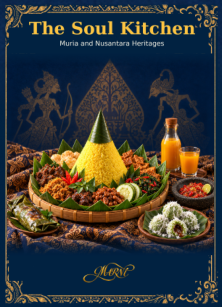
A cookbook and food memoir by Marni
Muria and Nusantara Heritages
More than a cookbook, The Soul Kitchen carries a philosophy passed from one generation to the next: that food can hold memory, meaning, balance and care—and that the way we nourish the body can also teach us how to live.
The heart of the book
This is not simply a book of instructions. It is an inheritance. Within its recipes lives a way of seeing the world: that the earth offers nourishment with meaning, that patience changes what fire cannot hurry, and that caring for a body begins with paying attention.
Long before nutrition had charts, medicine had machines, or the body was translated into numbers on a screen, the kitchen was a quiet place of observation. Leaves were steeped, roots pounded, broths simmered and foods fermented. Ingredients were chosen not only for taste, but for the comfort, strength and restoration people believed they could offer. These traditions are not a replacement for modern medicine; they are an older language of nourishment, balance and everyday care.
For the generations before us, food was never fuel alone. A meal could carry a prayer, a warning, a memory, a lesson in thrift and patience, a welcome for a stranger, or the quiet knowledge of when the body needed warmth and when it needed rest.
That is the philosophy The Soul Kitchen keeps alive. Each recipe asks us to look beyond the plate—to the soil, the season, the hands that prepared it, and the lesson hidden inside an ordinary meal. To cook is to remember. To feed someone is to say they matter. To pass the knowledge onward is nguri-uri kabudayan: to preserve culture by keeping it alive, not by freezing it in the past.
A recipe tells us what to do. A remembered kitchen tells us why it mattered.
From Mount Muria
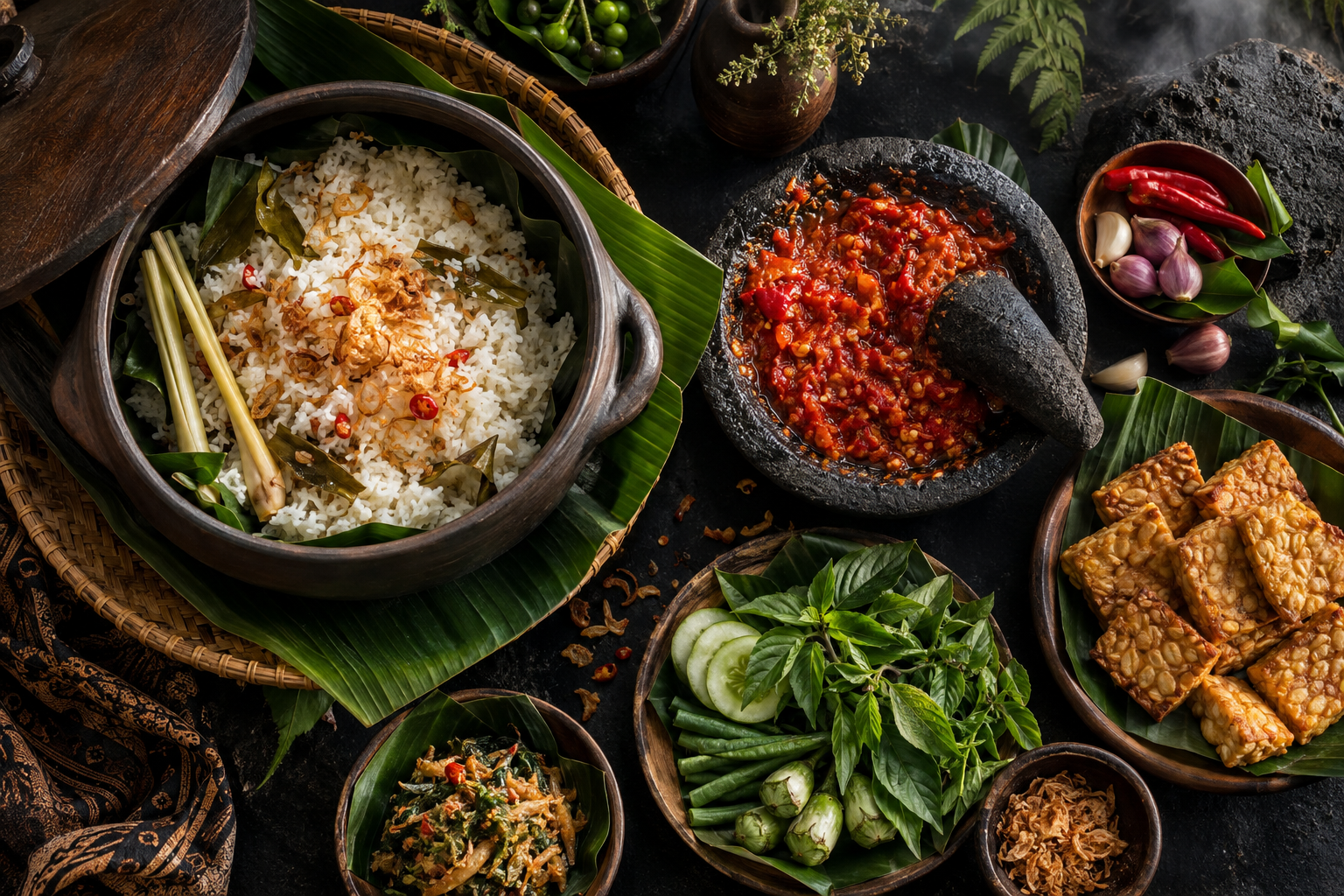
The Soul Kitchen begins near Mount Muria in Central Java, where food was never only food. A bowl of rice, sambal crushed in a cobek, tempe carried in banana leaves and a father cooking with happiness were all ways of saying: you belong here.
Marni brings these recipes from Indonesia through Singapore, France and Vienna without smoothing away their character. The result is a generous, deeply personal table—authentic, practical, occasionally fiery and gently humorous.
About the book
From the foothills of Mount Muria in Central Java, The Soul Kitchen: Muria and Nusantara Heritages gathers recipes, family memories, folklore, and the quiet wisdom passed from one kitchen to the next.
Part cookbook and part food memoir, it travels through the flavours of Java and the wider Indonesian archipelago—from fragrant tumpeng, comforting nasi liwet, and golden tempeh to fiery sambal, traditional jamu, and sweets made for sharing. Each recipe carries something more than ingredients: a place, a person, a family ritual, or a story that might otherwise disappear.
Written with warmth, honesty, poetry, and a little humour, this is a book about heritage that is still alive—measured not only in cups and spoons, but in instinct, memory, and the familiar instruction to add “just enough.”
Come for the recipes. Stay for the stories—and perhaps keep a little extra rice nearby, because the sambal does not believe in behaving quietly.
A taste from the book
My great-grandmother, Mbah Buyut Sumber, lived to 114. In our family memory, she belonged to the old rhythm of Mount Muria: herbs gathered with purpose, food cooked without hurry, and jamu prepared not as a fashionable drink, but as everyday Javanese knowledge.
Jamu could be bitter enough to make a child negotiate with the universe. Still, it carried care—turmeric staining the fingers, roots releasing their earthy scent, a recipe remembered by the hand before it was ever written down.
We rarely said “I love you” aloud. We asked, “Wis mangan?”—Have you eaten?
Then came my father’s sambal terong, warm nasi liwet and the cheerful clatter of lunch. In our house, love was generous, a little spicy, and usually served with rice. But this is only one corner of the table. The rest is waiting inside the book.
Discover what is inside→Inside the book
Home-style dishes, culinary history, ingredient knowledge and personal notes designed to help readers cook with confidence and understand what each dish carries.
From everyday sambal to the foundations of red, yellow and white spice pastes.
Nasi liwet, family meals and the dishes that make a kitchen feel inhabited.
Everyday food, feast dishes and recipes remembered through people and place.
Stories, traditions and context that protect the meaning behind the food.
A taste from every chapter
Eleven small glimpses from a much larger table—just enough story, spice and memory to make room for the next page.
But convenience has a quiet danger: not that it changes the kitchen, but that it can make us forget what the kitchen once carried. Before recipes were stored in phones, they lived in hands. Before a timer announced that something was ready, a cook listened to the oil, watched the colour of the bumbu, and knew by its fragrance when the rawness had gone. Knowledge moved from an elder to a child who stood nearby, apparently helping and very often stealing something fried.
Nasi liwet is the quiet centre of a kampung table. It does not need to shout because the fragrance arrives first: coconut milk warming with daun salam and lemongrass, slipping through the kitchen before the plates are ready. Soon sambal terong, pepes pindang, tempe, and kerupuk gather around it as though the rice sent invitations.
The first time Alban tasted my sambal terong, he found it late at night beside mendoan in the refrigerator. Eggplant is his favourite vegetable, so he mistook it for an innocent one. The next morning he reported, with the gravity of a survivor, that he had eaten the spice from hell.
The white thread in tempe binds bean to bean. Memory does something similar. It joins a market in Vienna to a kitchen near Muria, a Friday sauce to my father’s laughter, and a green lunch parcel to the hands that woke before mine. Separate moments become one story.
In Javanese, the close word is lawuh. In everyday speech, iwak also has a wider life than its neat translation suggests. It can mean fish, but it can also refer to animal flesh prepared as lauk. Depending on the family and the region, the joke stretches further into phrases such as iwak tempe or iwak peyek. Tempe may therefore be promoted to fish without ever learning to swim. Language, like a home cook, uses what it needs.
Pecel Pakis Colo belongs to Desa Colo in Kecamatan Dawe, high on the slopes of Mount Muria in Kudus. The damp mountain edges and riverbanks suit edible fern, and the young curled shoots—ental pakis—are gathered before they toughen. Blanched and covered with bumbu pecel, they make a breakfast whose address can be tasted.
Traditional markets also carry the saying tuna satak, bathi sanak—lose a little money, gain a relative or friend. It reflects a Javanese idea of trade in which profit is not counted only in coins, but also in trust and lasting relationships. The regular customer returns because the food is good, of course, but also because the seller remembers a face, adds one small piece to the parcel, and asks after the family.
Open an Indonesian spice drawer and it may look as though the forest, garden, and old harbour have agreed to share one shelf. There are roots stained gold, bark curled into quills, seeds waiting to be toasted, leaves kept in the freezer by cooks who live far from home, and one jar of shrimp paste whose lid should be checked twice before travelling.
The Javanese expression witing tresna jalaran saka kulina means that affection grows through familiarity. It could have been written for jamu. Beras kencur is easy to love on the first meeting. Pahitan may require several appointments, honest conversation, and possibly a sweet drink afterwards.
Nao is eight years old now, but one of my favourite memories belongs to when he was only one year and something—old enough to know what he wanted, too young to recognise that five o’clock in the morning was a controversial time to request it.
I hope these pages become stained, annotated, corrected, and argued with. A perfectly clean cookbook may be beautiful, but it has not yet been invited fully into the family. Write the name of the aunt who adds more kencur. Note that your market sells saltier teri. Circle the sambal that made somebody cry, and be kind enough to record whether the tears were emotional or entirely caused by chilli.

Meet the author
Born in Kudus, Central Java, near Mount Muria, Marni is a Javanese cook, storyteller and lifelong student of food as care. After living in Indonesia, Singapore, France and Austria, she wrote The Soul Kitchen to preserve the recipes, memories and cultural knowledge that travelled with her.
Alongside her writing, Marni teaches yoga for adults and children and works as a health, nutrition and wellness coach. Her background also includes psychological counselling for children and adolescents. Across these different paths, she returns to the same values that shape The Soul Kitchen: listening, care and the small daily gestures that help us feel connected.
Her voice is warm, culturally precise and gently funny—because even the most serious family memories usually have someone reaching for more sambal.
“This book carries my family table into the wider world, without leaving its soul behind.”
Follow the journey
Publication update
Choose Google Play Books, Apple Books or Kindle for the English ebook. The French Kindle ebook and all print editions remain available through Amazon. Find your edition in the bookshop and check purchase options for your account country.